

06
Oct
2026
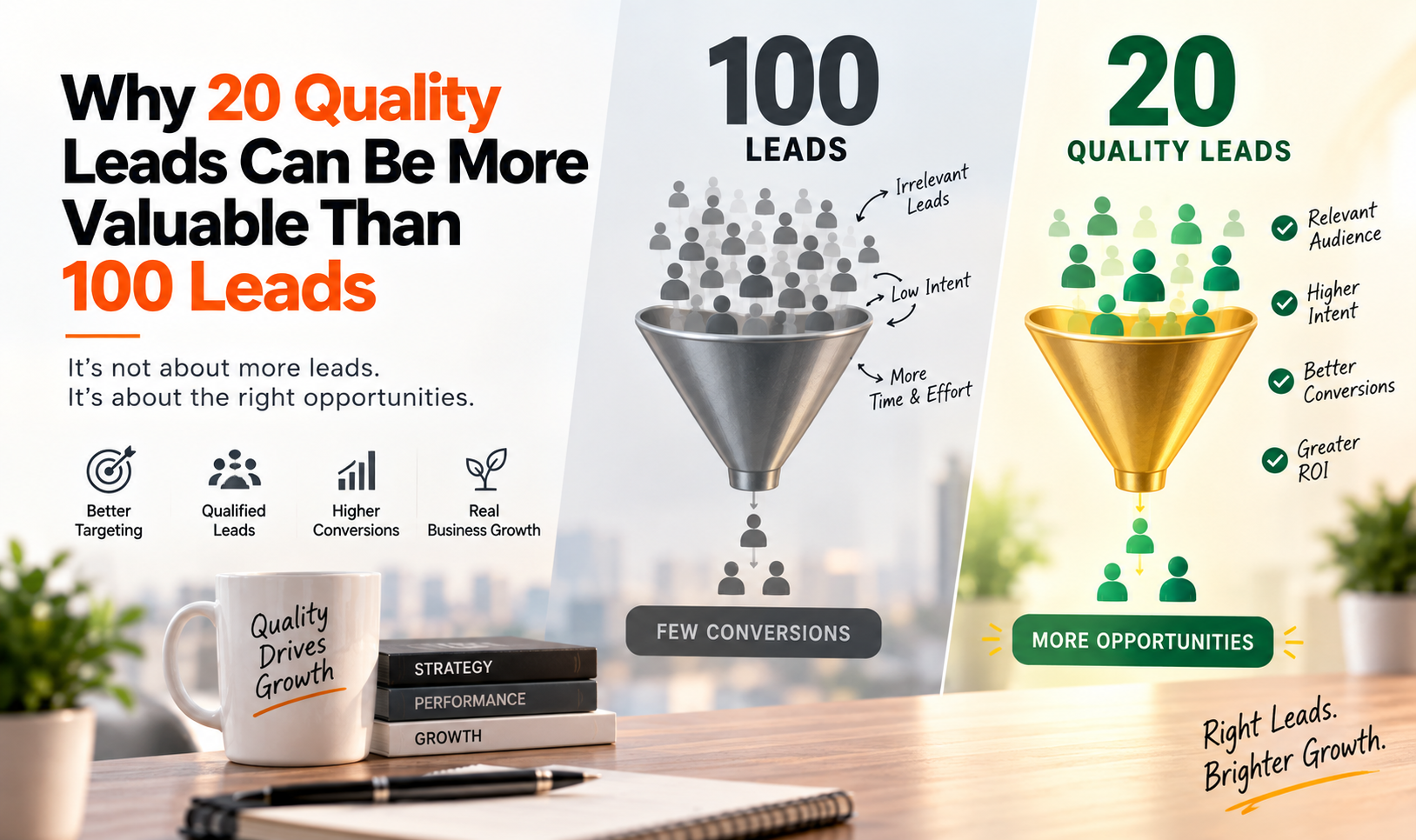
When it comes to lead generation, a bigger number can look impressive. A campaign that generates 100 leads may seem more successful than one that generates only 20. But here’s the real question: How many of those leads are actually relevant to your business?
For most businesses, 20 qualified leads with genuine buying intent can be far more valuable than 100 random enquiries. This is why modern lead generation is no longer just about increasing the number of leads. It is about improving lead quality, relevance and conversion potential.
What Makes a Lead Valuable?
A lead becomes valuable when it has a genuine possibility of becoming a customer.
A qualified lead usually matches important factors such as:
● Interest in your product or service
● A genuine business requirement
● Relevant budget
● Decision-making authority or influence
● A realistic purchase timeline
● Fit with your target audience
For example, if a B2B company receives 100 enquiries but only 10 match its target industry and budget, the headline number of 100 does not tell the complete story. On the other hand, 20 enquiries from businesses that actually need the service can give the sales team a much stronger opportunity to convert.
Lead Quality Matters More Than Lead Volume
Effective lead generation services focus on reaching the right audience rather than simply generating the highest possible number of enquiries. The objective is to create a stronger connection between:
Target Audience → Right Message → Relevant Lead → Sales Conversation → Conversion
When these elements work together, businesses can spend their marketing budget more strategically and give their sales teams better opportunities to work with.
The Role of B2B Lead Generation
In B2B marketing, lead quality becomes even more important. A B2B purchase can involve multiple decision-makers, longer sales cycles and higher-value transactions. Getting hundreds of irrelevant enquiries may not help a business move closer to a sale. A focused B2B lead generation strategy can target businesses based on factors such as industry, company size, location, job role, business requirement and intent. This allows marketing efforts to support the sales team with leads that have greater relevance.
How Performance Marketing Can Improve Lead Quality
Performance marketing is not simply about generating more clicks or enquiries. The real value comes from measuring what happens after a person interacts with a campaign.
Instead of looking only at metrics such as:
● Clicks
● Impressions
● Cost per lead
● Total enquiries
Businesses should also track:
● Qualified leads
● Lead-to-opportunity rate
● Sales-qualified leads
● Conversion rate
● Cost per qualified lead
● Revenue generated from campaigns
These metrics provide a clearer picture of whether marketing activity is contributing to actual business growth.
100 Leads vs 20 Qualified Leads
Consider a simple example.
Campaign A - 100 leads generated
● 60 irrelevant leads
● 20 low-intent enquiries
● 15 potential prospects
● 5 highly relevant prospects
Campaign B - 20 leads generated
● 5 low-intent enquiries
● 10 relevant prospects
● 5 highly relevant prospects
Campaign A may look better on the surface because it generated five times more leads. But Campaign B gives the sales team a more focused pool of potential customers. The point is not that fewer leads are always better. The point is that lead volume alone cannot define campaign success.
How Magic Pencil Helps Businesses Focus on Better Leads
At Magic Pencil, the focus is not simply on generating a large number of enquiries. The objective is to build marketing campaigns that connect businesses with audiences that are more relevant to their products or services.
From audience understanding and campaign strategy to creative communication and performance optimisation, every part of a campaign can influence the quality of leads it generates. Magic Pencil can help businesses look beyond surface-level numbers and focus on metrics that matter to growth. The approach can include:
● Understanding the ideal customer profile
● Identifying relevant audience segments
● Developing communication that speaks to the right prospects
● Creating conversion-focused campaigns
● Using performance data to optimise campaigns
● Tracking lead quality instead of only lead volume
● Aligning marketing efforts with business and sales objectives
For businesses exploring lead generation services, this shift can make marketing more meaningful. Instead of asking only how many people responded to a campaign, businesses can start asking whether those people are the right people to have a conversation with.
How to Improve Lead Quality
Improving lead quality requires alignment between marketing and sales.
1. Define Your Ideal Customer
Before launching a campaign, clearly identify who you want to reach. Consider their industry, location, business size, needs, budget and buying behaviour.
2. Create Relevant Campaign Messaging
Your messaging should clearly communicate what you offer, who it is for and why it matters. Specific messaging can naturally discourage audiences that are not a good fit.
3. Use Better Targeting
Audience targeting should be based on your ideal customer profile rather than simply trying to reach the largest possible audience.
4. Optimise Lead Forms
The right questions on a lead form can help businesses understand whether a prospect is genuinely relevant. At the same time, forms should remain simple enough to avoid unnecessary drop-offs.
5. Connect Marketing With Sales
Marketing should not stop when a lead submits a form. Sales feedback can reveal which sources, audiences and campaigns are producing genuinely valuable prospects.
6. Measure What Happens After the Lead
The strongest campaigns are optimised using downstream results, not just the initial number of enquiries.
The Real Goal of Lead Generation
Lead generation should ultimately contribute to business growth. That means the focus should move from:
“How many leads did we get?”
to:
“How many of those leads had real potential?”
And eventually:
“How many became customers?”
A campaign that generates fewer but better-fit leads can give sales teams more meaningful conversations, improve marketing efficiency and create a clearer path from advertising investment to revenue.
Why Businesses Should Look Beyond the Lead Count
A large lead count can make a campaign look successful at first glance. But marketing performance becomes clearer when businesses look at the entire journey, from the first interaction to qualification, sales conversation and conversion.
At Magic Pencil, the focus is on creating marketing that goes beyond numbers. By combining audience understanding, relevant communication and performance-driven optimisation, businesses can work towards building a healthier and more meaningful sales pipeline. Because the real value of lead generation is not simply getting more enquiries. It is getting the right opportunities from the right audience at the right stage of their buying journey.
Conclusion
In lead generation, 100 leads are not automatically better than 20. The real difference lies in who those leads are, how relevant they are and what happens after they enter your sales pipeline. Businesses that focus only on lead volume may end up spending more time and resources filtering enquiries. A focus on qualified leads and lead quality, on the other hand, can help marketing and sales teams work towards more meaningful opportunities.
Whether you are looking for B2B lead generation, performance marketing or professional lead generation services, the goal should be bigger than simply increasing the number on a campaign report. At Magic Pencil, we believe meaningful marketing starts with reaching the right people, not just more people. Because when the quality of your leads improves, the quality of your sales conversations can improve too.
Get in Touch